A Strategic Approach to Background Screening for Nonprofit Organizations, Houses of Worship, and Private Schools
Executive Summary
Background screening requirements for employees, volunteers, and contractors working with children and vulnerable populations continue to expand across the United States. California’s Assembly Bill 506 (AB 506) exemplifies this trend, mandating comprehensive background checks and training for anyone working with youth in service organizations. For nonprofit organizations, houses of worship, and private schools processing dozens or hundreds of background checks annually, the traditional model of outsourcing Live Scan fingerprinting to third-party providers creates bottlenecks, delays, and significant ongoing expenses.
This article examines an alternative approach: becoming an authorized Live Scan service provider and conducting fingerprinting in-house. Drawing from a detailed case study of Calvary Church in Westlake, California, we analyze the costs, benefits, implementation process, and strategic advantages of this model for organizations committed to maintaining the highest standards of child safety and volunteer screening.
What Is Live Scan Fingerprinting?
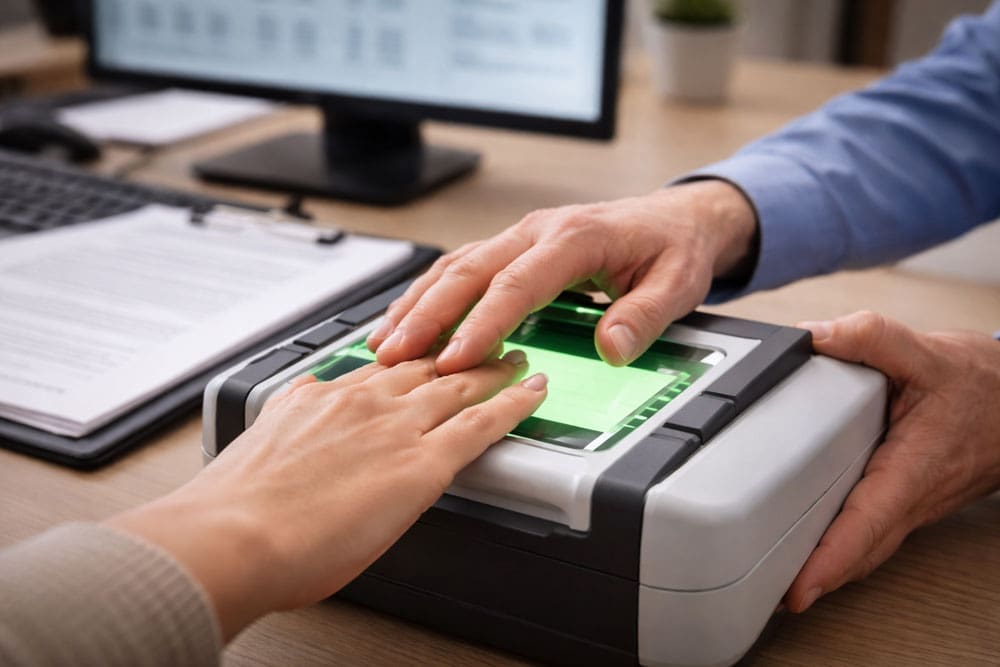
Live Scan is an electronic fingerprinting technology that captures fingerprint images digitally and transmits them electronically to the California Department of Justice (DOJ) and, when required, the Federal Bureau of Investigation (FBI) for criminal background checks. Unlike traditional ink-and-card fingerprinting, Live Scan eliminates mailing delays, reduces errors from smudged prints, and accelerates processing times.
The Live Scan process works as follows:
- Form Preparation: The applicant receives a completed “Request for Live Scan Service” form (BCIA 8016) from the requesting agency or organization.
- Fingerprint Capture: A certified fingerprint roller uses a Live Scan device to electronically capture the applicant’s fingerprints by scanning each finger on the device’s glass plate.
- Electronic Transmission: The fingerprint images and personal descriptor information are transmitted electronically to the California DOJ within 24 hours.
- Automated Database Search: The DOJ automatically searches the fingerprint images against all fingerprints in the statewide criminal record repository.
- Results Delivery: Background check results are transmitted electronically to the requesting agency, typically within 48-72 hours for clean records, though manual review may extend processing time when criminal history records are identified.
The Traditional Third-Party Model: Hidden Costs and Delays
Most nonprofit organizations, houses of worship, and private schools rely on third-party Live Scan service providers—typically commercial fingerprinting businesses, UPS stores, or specialized vendors. While this outsourcing model requires no upfront investment, it creates several operational and financial challenges:
Scheduling Bottlenecks: Volunteers and new employees must schedule appointments with external providers, often waiting days or weeks for available time slots. This delay extends onboarding timelines and risks losing motivated volunteers who lose enthusiasm during protracted background check processes.
Geographic Inconvenience: Potential volunteers may need to travel significant distances to reach the nearest Live Scan provider, creating barriers to participation, particularly for elderly volunteers or those without reliable transportation.
Per-Transaction Costs: Commercial Live Scan providers typically charge $15-$40 per rolling (the fee for capturing and transmitting fingerprints), in addition to the mandatory California DOJ and FBI processing fees. For organizations processing 50-200 volunteers and employees annually, these rolling fees represent $750-$8,000 in annual expenses.
Loss of Volunteer Momentum: The delay between a volunteer expressing interest and completing their background check creates attrition. Research on volunteer recruitment demonstrates that momentum and immediate engagement are critical to conversion and retention.
Administrative Complexity: Coordinating with external vendors, tracking completion status, and ensuring proper documentation adds administrative burden to already-stretched nonprofit staff.
Case Study: Calvary Church, Westlake, California
Calvary Church in Westlake, California, provides a compelling case study demonstrating the tangible benefits of becoming an in-house Live Scan provider. This mid-to-large congregation made the strategic decision to bring fingerprinting services in-house, investing approximately $8,000 in startup costs and several months of implementation time to establish their own Live Scan capability.
Implementation Overview
Startup Investment: Less than $8,000 Implementation Timeline: Several months from initial application to full operational status Complexity Assessment: Relatively straightforward administrative process
The implementation process involved multiple administrative steps:
- State Licensing: Obtaining authorization from the California Department of Justice to operate as a private Live Scan service provider
- Fingerprint Roller Certification: Training and certifying staff or volunteers as California-approved fingerprint rollers
- Equipment Acquisition: Purchasing Live Scan hardware from an approved vendor
- Facility Setup: Designating appropriate space for fingerprinting with necessary privacy and security considerations
- Process Documentation: Creating standard operating procedures for scheduling, conducting, and documenting Live Scan sessions
Documented Benefits
Calvary Church has realized multiple strategic and operational benefits from this investment:
1. Accelerated Onboarding and Improved Volunteer Retention
By offering immediate on-site fingerprinting, Calvary eliminates the delay between a volunteer’s decision to serve and the initiation of their background check. Prospective volunteers can be fingerprinted immediately following orientation or training sessions, maintaining their enthusiasm and momentum. This immediate action demonstrates organizational competence and values the volunteer’s time, significantly improving retention rates during the onboarding process.
Impact: Research on volunteer recruitment indicates that every day of delay in the onboarding process increases the probability of volunteer attrition. Immediate fingerprinting capabilities eliminate a major bottleneck in volunteer activation.
2. Faster Background Check Turnaround
While Live Scan processing times are determined by the California DOJ and FBI (typically 48-72 hours for clean records), in-house capability eliminates the front-end delays associated with scheduling external appointments. Volunteers proceed from interest to cleared status in days rather than weeks.
Impact: Faster turnaround enables quicker deployment of volunteers into ministries and programs, directly supporting organizational mission effectiveness.
3. Significant Cost Savings
Every Live Scan session conducted in-house saves the church $10-$15 in rolling fees that would otherwise be paid to commercial providers. For organizations processing significant volumes of background checks, these savings compound rapidly:
- 50 volunteers/year: $500-$750 annual savings
- 100 volunteers/year: $1,000-$1,500 annual savings
- 200 volunteers/year: $2,000-$3,000 annual savings
Break-Even Analysis: With an initial investment of approximately $8,000, Calvary Church achieves break-even within 3-5 years (at 100-200 fingerprints annually), after which all savings flow directly to ministry funding.
Long-Term Value: After break-even, the ongoing annual savings of $1,000-$3,000 represents resources that can be redirected to program development, additional staff support, or other organizational priorities.
4. Enhanced Ministry Engagement Opportunities
Calvary has developed a cadre of trained volunteer fingerprint rollers, creating a new avenue for member involvement. Serving as a certified fingerprint roller provides meaningful volunteer opportunities that directly support church safety and compliance, while being time-limited and skill-based—an attractive profile for volunteers seeking defined, professional volunteer roles.
Impact: This creates a pipeline of trained volunteers who understand background screening requirements and can serve as ambassadors for the church’s commitment to child safety.
5. Potential Revenue Generation (Future Opportunity)
While Calvary Church is not currently providing Live Scan services to external organizations, this capability exists. As an authorized Live Scan provider, the church could offer fingerprinting services to other churches, private schools, or nonprofit organizations in their community, creating a new revenue stream while supporting regional safety and compliance.
Strategic Consideration: Organizations considering this model should evaluate whether offering community fingerprinting services aligns with their mission, capacity, and risk tolerance. Revenue generation is possible but not required to justify the investment.
Regulatory Framework and Compliance Considerations
California Assembly Bill 506 (AB 506)
California AB 506 establishes comprehensive requirements for background checks and mandated reporter training for anyone working with youth in service organizations. The legislation requires:
- DOJ and FBI fingerprint-based background checks for employees and volunteers having contact with minors
- Mandated reporter training within six months of hire or initial volunteer service
- Ongoing compliance with updated background check requirements
Organizations subject to AB 506 face significant annual fingerprinting volume, making in-house Live Scan capability particularly cost-effective.
California Volunteers Expecting Child Health and Safety (CalVECHS)
CalVECHS is a California DOJ-administered program allowing qualified nonprofit, faith-based, youth-serving, and disability-care organizations to receive federal-level criminal offender record information (CORI) based on fingerprint background checks. Operating under the National Child Protection Act (NCPA)/Volunteers for Children Act, CalVECHS addresses a longstanding gap: previously, many non-governmental entities couldn’t access FBI-level clearance due to federal restrictions.
Eligibility: Organizations must enroll in CalVECHS using the DOJ’s BCIA 9017 form and collect signed BCIA 9018 waivers from every applicant authorizing access to state and federal CORI.
Significance for In-House Providers: Organizations that become Live Scan providers and participate in CalVECHS can provide comprehensive federal and state background checks for their volunteers, ensuring the highest level of screening for those working with vulnerable populations.
Licensing Process: State-by-State Variation
While this case study focuses on California, the concept of in-house Live Scan capability applies nationally, though regulatory processes vary significantly by state. Organizations interested in replicating Calvary’s model must research their state’s specific requirements:
**California Process Highlights:**
- Application to California DOJ to become a private Live Scan service provider
- Fingerprint roller certification (requires training and examination)
- Purchase of DOJ-approved Live Scan equipment from authorized vendors
- Ongoing compliance with DOJ equipment maintenance and software update requirements
- Expected timeline: 8-12 weeks from application submission to authorization (not including fingerprint roller certification time)
Critical Success Factor: Organizations considering this path should engage with experienced consultants or work directly with state DOJ offices to navigate the licensing process efficiently.
Financial Analysis: Investment and Return
Startup Costs (California Example)
Based on Calvary Church’s experience and current market conditions:
| Cost Category | Estimated Range |
| Live Scan Equipment (Hardware) | $3,000 – $5,000 |
| DOJ Application and Licensing Fees | $500 – $1,000 |
| Fingerprint Roller Certification (per person) | $200 – $400 |
| Facility Setup (privacy screens, furniture, signage) | $500 – $1,000 |
| Initial Training and Consultation | $1,000 – $2,000 |
| **Total Initial Investment** | **$5,200 – $9,400** |
Calvary Church Actual: Less than $8,000
Ongoing Operational Costs
- Equipment Maintenance: Minimal (DOJ-required software updates typically provided by vendors)
- Supplies: Negligible (cleaning supplies for equipment)
- Personnel Time: Volunteer-based (no incremental cost if using trained volunteer rollers)
Annual Savings Calculation
**Assumptions:**
- Commercial Live Scan rolling fee: $20 (average)
- Annual fingerprinting volume: 100 individuals
- In-house cost per fingerprint: $0 (volunteer roller, no incremental costs)
Annual Savings: $20 × 100 = $2,000
Break-Even Period: $8,000 initial investment ÷ $2,000 annual savings = 4 years
10-Year Net Savings: ($2,000 × 10 years) – $8,000 = $12,000
Scaling the Analysis
Organizations should calculate their own break-even based on actual fingerprinting volume:
**Small Organization (50/year):**
- Annual savings: $1,000
- Break-even: 8 years
- 10-year net savings: $2,000
**Medium Organization (150/year):**
- Annual savings: $3,000
- Break-even: 2.7 years
- 10-year net savings: $22,000
**Large Organization (300/year):**
- Annual savings: $6,000
- Break-even: 1.3 years
- 10-year net savings: $52,000
Conclusion: The financial case strengthens significantly as annual fingerprinting volume increases. Organizations processing 100+ individuals annually achieve compelling returns within 3-4 years.
Strategic Implementation Considerations
Is In-House Live Scan Right for Your Organization?
Organizations should evaluate the following factors:
Volume Threshold: As demonstrated above, organizations fingerprinting fewer than 50 individuals annually may not achieve acceptable break-even timelines. The model is most compelling for organizations processing 100+ annually.
Facility Requirements: Organizations need dedicated space for fingerprinting with appropriate privacy, security, and accessibility considerations. The fingerprinting area should provide visual privacy while maintaining organizational security protocols.
Staffing Capacity: At least one staff member or reliable volunteer must complete fingerprint roller certification and serve as the primary operator. Best practice recommends training 2-3 rollers to ensure coverage during vacations, illnesses, or departures.
Organizational Complexity: Organizations must be capable of managing the administrative requirements of maintaining Live Scan authorization, including DOJ reporting, equipment maintenance, and ongoing compliance.
Long-Term Commitment: The break-even analysis assumes multi-year operation. Organizations facing facility relocations, significant organizational changes, or uncertain futures should carefully consider the investment horizon.
Risk Management Considerations
**Data Security:** Live Scan providers handle sensitive personal information and fingerprint data. Organizations must implement appropriate data security protocols, including:
- Secure storage of completed forms before transmission
- Controlled access to Live Scan equipment and systems
- Proper disposal of paper records after electronic submission
- Training for all authorized users on confidentiality requirements
**Quality Control:** Poor-quality fingerprint captures result in DOJ rejections, requiring re-submission. Organizations should:
- Ensure all rollers receive thorough training
- Establish quality review protocols
- Maintain equipment properly to ensure optimal performance
- Track rejection rates and address any systemic issues
Liability Considerations: Organizations should consult with their insurance carriers and legal counsel to ensure that operating as a Live Scan provider is covered under existing liability policies.
Implementation Roadmap
For organizations deciding to pursue in-house Live Scan capability, the following roadmap provides a structured approach:
Phase 1: Assessment and Planning (1-2 months)
- Volume Analysis: Document current annual fingerprinting volume and project future needs
- Financial Analysis: Calculate break-even period based on actual organizational costs and volumes
- Facility Assessment: Identify appropriate space for fingerprinting operations
- Stakeholder Engagement: Present business case to leadership for authorization to proceed
Phase 2: Regulatory Compliance (2-4 months)
- Research Requirements: Obtain complete application requirements from state DOJ
- Identify Potential Rollers: Recruit staff or volunteers willing to pursue certification
- Fingerprint Roller Certification: Complete required training and examination
- Submit DOJ Application: Complete and submit all required documentation
- Equipment Selection: Research and select DOJ-approved Live Scan equipment vendor
Phase 3: Infrastructure Development (1-2 months)
- Equipment Procurement: Purchase and install Live Scan hardware
- Facility Preparation: Set up privacy screens, furniture, signage, and security measures
- Process Documentation: Create standard operating procedures, training materials, and forms
- Software Configuration: Complete DOJ-required system configuration and testing
Phase 4: Training and Launch (1 month)
- Operator Training: Ensure all certified rollers are fully trained on equipment operation
- Test Submissions: Conduct test fingerprinting sessions and verify successful transmission
- Internal Communication: Announce new capability to staff, volunteers, and leadership
- Process Integration: Integrate fingerprinting into existing volunteer onboarding workflow
Phase 5: Ongoing Operations and Evaluation
- Quality Monitoring: Track rejection rates and address quality issues
- Volume Tracking: Document actual usage to validate financial projections
- User Feedback: Collect feedback from volunteers and employees on the experience
- Annual Review: Evaluate costs, benefits, and strategic fit on an annual basis
Total Implementation Timeline: 5-9 months from decision to full operational capability
Broader Applications: Serving the Community
While organizations typically pursue in-house Live Scan primarily for internal needs, the capability creates potential for broader community service:
Collaborative Fingerprinting Networks
Multiple small organizations in geographic proximity could share access to a single Live Scan provider, distributing costs while all organizations benefit from improved service. For example:
- Church Collaborative: Three to five churches pool resources to establish Live Scan at the largest church, with all churches having access
- Private School Consortium: Multiple private schools in a region share one centralized Live Scan facility
- Nonprofit Alliance: A nonprofit service organization becomes the Live Scan provider for other member organizations in their network
This collaborative model reduces per-organization costs while maintaining the benefits of local, immediate access.
Fee-for-Service Model
Organizations with sufficient volume and capacity may offer fingerprinting services to other organizations on a fee-for-service basis. Key considerations:
Pricing Strategy: Charge rates below commercial providers but sufficient to cover actual costs (equipment maintenance, supplies, scheduling overhead)
Capacity Management: Ensure internal organizational needs remain the priority while managing external appointments
Legal Structure: Consult with legal counsel regarding any regulatory or tax implications of providing paid services to external parties
Insurance Coverage: Verify that liability coverage extends to providing services to non-members
Conclusion: Strategic Investment in Safety and Efficiency
The decision to become an in-house Live Scan provider represents a strategic investment in organizational efficiency, volunteer retention, and financial sustainability. Calvary Church’s experience demonstrates that mid-to-large organizations processing 100+ background checks annually can achieve:
- Immediate operational improvements through faster onboarding and elimination of scheduling delays
- Meaningful cost savings that compound annually after achieving break-even
- Enhanced volunteer experience by demonstrating organizational competence and respecting volunteer time
- New engagement opportunities through the development of trained fingerprint roller volunteers
- Long-term financial value with cumulative savings over 10+ years potentially exceeding $10,000-$50,000
The regulatory process, while requiring several months and careful attention to compliance requirements, is manageable for organizations with competent administrative capacity. The initial investment of $5,000-$9,000, while not trivial, achieves payback within 2-5 years for most organizations with sufficient volume.
For nonprofit organizations, houses of worship, and private schools committed to maintaining the highest standards of child safety while optimizing operational efficiency, in-house Live Scan capability merits serious consideration as a best practice investment.
Organizations interested in exploring this opportunity should begin with a comprehensive assessment of their fingerprinting volume, facility capabilities, and organizational capacity, followed by consultation with experienced advisors to navigate the state-specific regulatory requirements.
The ability to fingerprint volunteers immediately, combined with demonstrable cost savings and enhanced volunteer retention, makes in-house Live Scan one of the most impactful operational improvements available to organizations serving children and vulnerable populations.
________________________________________________________________________________
About Kearnan Consulting Group, LLC
Kearnan Consulting Group specializes in security and risk management consulting for nonprofit organizations, houses of worship, and private schools. Our services include security vulnerability assessments, emergency planning, volunteer background screening optimization, and regulatory compliance guidance.
________________________________________________________________________________
Disclaimer: This article provides general information about Live Scan fingerprinting implementation and should not be construed as legal advice. Organizations should consult with qualified legal counsel and their state Department of Justice regarding specific regulatory requirements, compliance obligations, and liability considerations before implementing in-house fingerprinting services. Regulatory requirements vary significantly by state and jurisdiction. The Calvary Church case study represents one organization’s experience and results may vary based on organizational circumstances, regulatory environment, and implementation approach.