How Faith-Based Organizations Have Responded to an Escalating Threat and What the Future Demands
Introduction
It is no surprise to any student of history that religion and conflict have long been intertwined. Across centuries, faith has been invoked to fuel violence, and war has been used as a tool to advance religious agendas. These patterns are not the story of every faith tradition, but they are part of the human story, and they underscore why modern ministries and faith-based organizations must approach safety with clarity, humility, and intentional planning. This reality does not diminish the profound good that faith communities bring to the world, but it does remind us that vigilance, preparedness, and responsible stewardship are essential.
For centuries, houses of worship have served as sanctuaries, places of solace, spiritual renewal, and communal gathering. In the American tradition, these institutions occupy a unique place in civic life, protected by the First Amendment and sustained by the voluntary commitment of millions of congregants across every faith tradition. Yet over the past two decades, the sanctity of these spaces has been shattered with increasing frequency and lethality.
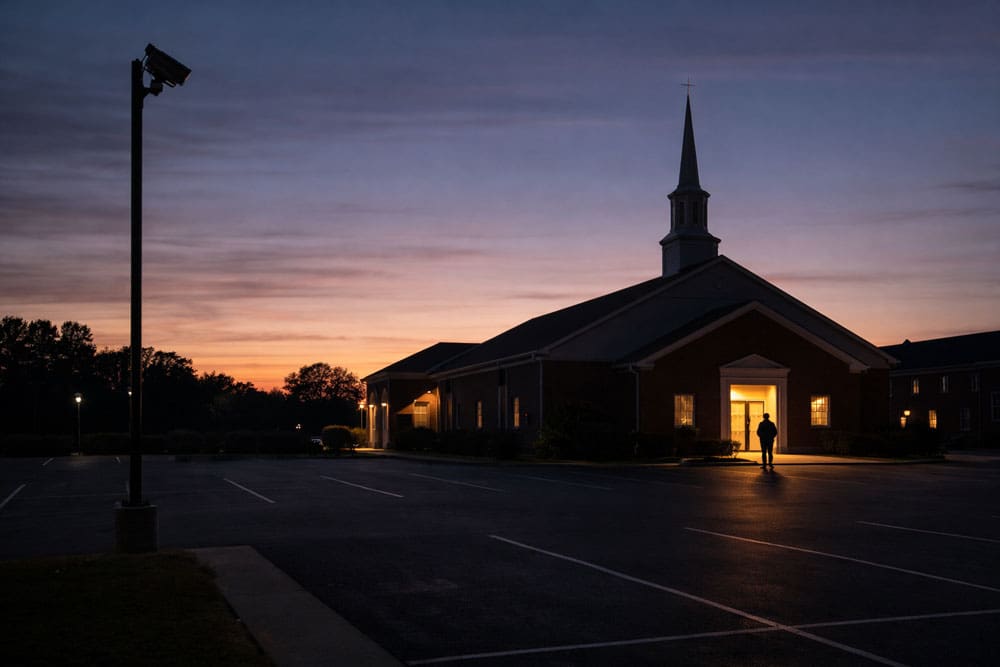
The Faith-Based Security Network (FBSN), which has tracked deadly force incidents at faith-based organizations since 1999, has documented 2,361 such events across its dataset. The Violence Prevention Project at Hamline University, a nonpartisan research center founded by Dr. Jillian Peterson and Dr. James Densley, maintains the most comprehensive database of its kind: from 2000 through 2025, the Project has documented 399 homicide incidents at U.S. houses of worship resulting in 512 fatalities and 213 injuries. Separately, research compiled by Carl Chinn found that from 2000 to 2024, 379 distinct incidents resulted in 487 deaths at religious congregations and community centers. These figures represent not merely statistical abstractions but an unmistakable pattern: American houses of worship face a persistent and evolving threat environment that demands a commensurate security posture.
This article examines the trajectory of violence against houses of worship in the United States, assesses how faith-based organizations have, and have not, responded to the challenge, and offers a forward looking analysis of the threat landscape that congregational leaders, security professionals, and policymakers must confront.
I. The Evolving Threat: A Quarter Century of Violence
Historical Roots
Violence against American houses of worship is not a modern phenomenon. It is woven into the fabric of the nation’s history. In 1834, an anti-Catholic mob burned the Ursuline Convent in Charlestown, Massachusetts. In 1838, Missouri militia massacred 17 to 19 Latter-day Saints at the Haun’s Mill settlement. The Philadelphia Nativist Riots of 1844 destroyed multiple Catholic churches and left more than 20 dead. Throughout Reconstruction and into the twentieth century, Black churches were the targets of systematic arson and bombing campaigns. The 1921 Tulsa Race Massacre destroyed Mt. Zion Baptist Church and other Black houses of worship, leaving an estimated 100 to 300 dead. During the Civil Rights era, more than 50 documented bombings and arsons targeted Black churches across the South, culminating in the 1963 16th Street Baptist Church bombing in Birmingham, Alabama, which killed four young girls.
This history matters for two reasons. First, it demonstrates that the targeting of congregations for ideological, racial, or religious reasons is deeply embedded in American patterns of violence. Second, it reveals a recurring failure: communities and institutions have consistently underestimated the threat until catastrophe forces a reckoning.
The Scale of the Modern Problem
The scope of violence directed at houses of worship today is far broader than the mass casualty events that dominate headlines. The Violence Prevention Project’s database reveals a threat landscape driven primarily by interpersonal violence: domestic violence accounts for 23% of all house of worship homicides, escalation of disputes for 22%, and robbery for 16%. Ideologically motivated attacks, while they produce the highest casualty counts, represent only 5% of all incidents. The FBSN’s Deadly Force Incident Study, which uses a broader methodology encompassing all deadly force events at faith-based organizations, identifies robbery as the leading trigger at approximately 24.7% and domestic violence at 14.3%. Regardless of which dataset is consulted, the conclusion is the same: the overwhelming majority of violence at houses of worship is not the product of ideology but of personal crisis, criminal opportunity, and disputes that escalate lethally on or near church property.
The Violence Prevention Project data reveals other critical patterns for security planning. Up to 71% of all violent incidents occurred outside the worship space itself, in parking lots, on sidewalks, or at outdoor events. Sunday is the most dangerous day, accounting for 24% of all incidents, and morning hours are the peak period at 30%. Among victims whose affiliation was documented, 36% were church members and 9% were pastors or clergy. Thirteen percent of all victims were under the age of 18.
Perhaps the most alarming finding is the security posture of the facilities themselves. Only 13% of the houses of worship where homicides occurred had any security systems in place at the time of the incident. Eighty-eight percent of the facilities were publicly accessible, with no access controls of any kind. These figures give empirical weight to what practitioners in the field have long observed: the vast majority of American congregations remain effectively unprotected.
The FBI’s 2024 Hate Crime Statistics, released in August 2025, documented 11,679 total hate incidents nationwide, the second highest year on record since reporting began in 1991. Religious bias motivated roughly one in four reported incidents. A CBS News review of FBI crime data further revealed that assaults or attacks against individuals at churches, synagogues, temples, and mosques surged nearly 100% between 2021 and 2023. The Family Research Council tracked 415 separate incidents impacting 383 churches in 2024 alone, continuing a steep upward curve: the Council documented 436 acts of hostility in 2023, more than double the number reported in 2022, and 915 total incidents from 2018 through 2023.
A critical finding is the disproportionate lethality of mass casualty events. The Violence Prevention Project classifies only 7% of house of worship homicides as active shooter incidents, yet these events account for a vastly disproportionate share of total fatalities. This concentration of deaths in a small number of events has outsized implications for both security planning and public perception of risk. Congregations that prepare exclusively for an active shooter scenario while neglecting the far more common threats of domestic violence, robbery, and dispute escalation are preparing for the least likely event while leaving themselves exposed to the most probable ones.
The threat is not confined to Sunday mornings. Weekly newsletters from practitioners in the field document a relentless drumbeat of lower profile incidents that rarely make national headlines but collectively define the risk environment. In a single week in March 2026, documented incidents included a man arrested at a Michigan church service carrying explosive devices, a pipe bomb threat called in to a New Mexico church, a masked intruder attempting to breach a New York preschool housed in a church, a synagogue in Vermont placed under surveillance by an unidentified individual, and a white supremacist group threatening to attack a Florida church on Easter Sunday. These events rarely warrant more than a local news mention, but they represent the broad baseline of risk that every congregation faces.
Disproportionate Targeting
While approximately 97% of deadly incidents have occurred at Christian churches, a figure that reflects the sheer number of Christian congregations in the United States, the data reveals a starkly disproportionate targeting of minority faith communities when adjusted for population. The FBI’s 2024 report documented 1,938 anti-Jewish hate crimes, the highest number ever recorded, representing 69% of all religion-based hate crimes despite the Jewish community comprising approximately 2% of the U.S. population. Anti-Muslim offenses numbered 256, accounting for roughly 9% of religion-based incidents.
These figures reflect a troubling acceleration. Anti-Jewish hate crimes had already risen from 1,832 incidents in 2023 to the 2024 record, representing a trajectory that the Secure Community Network described as sustained and intensifying in the wake of the October 7, 2023 Hamas attack on Israel and the ensuing conflict in the Middle East. The Anti-Defamation League’s 2024 Audit of Antisemitic Incidents, released in April 2025, documented 9,354 total antisemitic incidents nationwide, the highest figure in the Audit’s 46 year history, representing a 344% increase over five years. For the first time, a majority of all incidents, 58%, contained elements related to Israel or Zionism. Assaults against Jewish individuals increased 21%. The ADL Center on Extremism has documented 20 terrorist plots or attacks motivated by antisemitism targeting Jews or Jewish institutions in the United States since January 2020, with 13 of those occurring in just the 20 months from July 2024 through March 2026.
The motive profiles also differ significantly by faith community. At Christian churches, the primary drivers of deadly violence are domestic disputes, personal grievances, mental illness, and robbery. At Jewish institutions, the predominant motives are antisemitism and white supremacist ideology, typically carried out by ideologically driven outsiders. Mosques face attacks rooted in Islamophobia and xenophobia. Sikh gurdwaras have been targeted by white supremacists and, in some cases, by attackers who mistakenly identified Sikh congregants as Muslim. Hindu and Buddhist temples experience lower frequency but documented incidents of ethnic bias and arson. This variation in threat profiles means that no single security template fits all congregations; effective planning must account for the specific risk landscape of each faith community.
Landmark Incidents
Several mass casualty events have defined the public understanding of violence at houses of worship in America and have served as inflection points for the security conversation. The following are among the most consequential:
The Church Arson Epidemic (1993–1996). Between 1993 and 1996, more than 430 arsons and fire bombings struck predominantly Black churches across the southeastern United States. Although no deaths were directly attributed to this campaign, the systematic nature of the attacks prompted Congress to pass the Church Arson Prevention Act of 1996, which enhanced federal jurisdiction over attacks on houses of worship and established the National Church Arson Task Force.
Emanuel AME Church, Charleston, South Carolina (June 2015). White supremacist Dylann Roof murdered nine parishioners during a Bible study, exposing the vulnerability of congregations that welcome strangers into intimate worship settings. The attack galvanized national conversation about racially motivated violence and house of worship security.
First Baptist Church, Sutherland Springs, Texas (November 2017). Twenty-six worshipers were killed in what remains the deadliest mass shooting at an American house of worship in modern history. The attack was motivated by a domestic dispute and highlighted how personal grievances can escalate into mass casualty violence within congregational settings.
Tree of Life Synagogue, Pittsburgh, Pennsylvania (October 2018). A white supremacist with a documented history of antisemitism shot and killed eleven congregants during Shabbat services, marking the deadliest antisemitic attack in American history. The incident catalyzed significant federal and communal investment in Jewish institutional security.
Congregation Beth Israel, Colleyville, Texas (January 2022). A British national linked to extremist ideology took four hostages during a Shabbat service, demanding the release of an imprisoned al-Qaeda operative. All hostages escaped unharmed after an eleven-hour standoff that ended when FBI tactical officers breached the building and killed the hostage taker. The incident demonstrated that international terrorist sympathies can manifest directly against American congregations.
The Covenant School, Nashville, Tennessee (March 2023). A shooter killed six people, three children and three adults, at a private school operated as a ministry of a Presbyterian Church in America congregation. The attack prompted a nationwide reassessment of security protocols at church operated schools and educational programs.
Lakewood Church, Houston, Texas (February 2024). A woman armed with an AR-15 style rifle opened fire in the lobby of the 45,000-member megachurch. Off-duty law enforcement officers working as church security engaged and killed the shooter. Her seven-year-old son, who accompanied her, was critically wounded. The incident underscored that even the largest congregations with existing security measures remain vulnerable.
Annunciation Catholic Church and School, Minneapolis, Minnesota (August 2025). A 23-year-old former student opened fire during a school wide Mass, killing two children and injuring 28 others. The attack has been classified as domestic terrorism and an anti-Catholic hate crime. Investigators noted that the church’s practice of locking its doors once Mass began likely prevented an even greater loss of life.
Church of Jesus Christ of Latter-day Saints, Grand Blanc Township, Michigan (September 2025). An assailant drove a vehicle into the building and opened fire, killing four congregants and injuring eight others. The FBI determined the attack was motivated by hatred toward the Mormon religious community, representing one of the first confirmed vehicle ramming attacks against an American house of worship.
Temple Israel, West Bloomfield Township, Michigan (March 2026). A vehicle ramming and firearms attack at this synagogue was classified by the FBI as a targeted act of antisemitic violence and an act of terrorism. Security officers engaged the assailant before he could reach congregants, and investigators noted the attacker also employed fireworks and gasoline as incendiary devices. The event underscored that the threat to Jewish institutions remains acute and that hardened security measures can save lives.
Each of these events represents not only a human tragedy but also a data point in a pattern that security professionals and congregational leaders can no longer afford to dismiss as aberrational.
II. The Response: Progress, Gaps, and Persistent Reluctance
Federal Investment and Resources
The federal government’s most significant instrument for house of worship security is the Nonprofit Security Grant Program (NSGP), administered by FEMA under the Department of Homeland Security. Established by legislation enacted in 2004 and first funded in 2005 at approximately $25 million, the NSGP has grown dramatically: its FY 2025 appropriation stood at $274.5 million, and over its history the program has allocated more than $1.8 billion to nonprofit organizations, with more than 14,000 applications awarded. In August 2025, DHS announced $110 million in awards to more than 600 faith-based organizations and other nonprofits for security enhancements including cameras, alert systems, access controls, lighting, and training programs.
The Cybersecurity and Infrastructure Security Agency (CISA) has developed a comprehensive suite of resources for houses of worship, including a security self-assessment tool, a detailed security guide analyzing ten years of targeted attacks, and access to Protective Security Advisors—trained subject matter experts who assist state, local, tribal, and territorial officials and critical infrastructure owners with vulnerability mitigation. The DHS Center for Faith-Based and Neighborhood Partnerships and the Faith-Based Security Advisory Council (FBSAC), reconstituted in July 2022, further coordinate interagency support for faith communities.
For FY 2026, Congress and the Administration agreed on a budget of $300 million for the NSGP, a modest increase over prior years, with eligible organizations able to request up to $200,000 per location. However, the partial shutdown of DHS that began on February 14, 2026, forced FEMA’s grants management system offline, freezing new grant processing, disbursements on existing awards, and technical assistance for applicants. As of late March 2026, the shutdown had exceeded 40 days, becoming the longest partial government shutdown in U.S. history, with no resolution in sight. The operational consequence is significant: houses of worship that were counting on federal security funding face indefinite delays at precisely the moment the threat environment is escalating.
The Private Sector and Nonprofit Ecosystem
A robust ecosystem of private sector and nonprofit organizations has emerged to serve the house of worship security market. The Faith-Based Security Network (FBSN), a 501(c)(3) nonprofit, provides data driven resources, regional workshops, and an annual conference connecting security operators, faith leaders, and law enforcement. Organizations such as Strategos International, Sheepdog Church Security, and Agape Tactical offer specialized training covering active shooter response, situational awareness, conflict de-escalation, and security team development. Annual conferences, including those hosted by the National Organization of Church Security and Safety Management (NOCSSM) and the Church Facilities Expo, provide continuing education for security teams.
Christian Warrior Training, founded by retired Police Sergeant Keith Graves, a 29 year veteran of law enforcement and 20 year SWAT team member, provides free online courses, a weekly newsletter, and in person training events including the Christian Warrior Academy. Graves also teaches at Lt. Col. Dave Grossman’s Bulletproof House of Worship Safety Conference, bringing operational law enforcement experience directly to church security teams.
The Secure Community Network (SCN), the official homeland security and safety initiative of the organized Jewish community, has established a model for denominational security infrastructure that coordinates threat intelligence sharing, provides direct protective services, and offers training and consultation to Jewish institutions nationwide. Its operational approach—integrating real-time intelligence with community level preparedness—represents a benchmark that other faith traditions have only recently begun to emulate.
At the grassroots level, practitioners like Ron Reynolds of Church Sentry and Jim Howard of the Safety & Security Newsletter continue to bridge the gap between professional security doctrine and congregational reality. Their work emphasizes that church security is fundamentally a ministry, not a militia—a distinction that resonates with the theological concerns many congregational leaders express about introducing security measures into worship settings.
The Gap That Persists
Despite the expansion of federal resources, private training programs, and denominational security initiatives, the adoption rate among houses of worship remains alarmingly low. Industry estimates suggest that approximately 75% of all churches lack any formalized security plan, a figure corroborated by the Violence Prevention Project’s finding that only 13% of houses of worship where homicides occurred had any security systems in place. Church Mutual Insurance’s Risk Radar survey found that only 27% of respondents felt their church or organization was prepared for an armed intruder event, even as 54% of Americans identified an armed intruder or physical violence as their top safety concern at gatherings, a figure that rose from 45% in the same survey’s initial administration in 2019.
The reasons for this gap are multifaceted. Many congregational leaders remain philosophically resistant to the idea of security measures within a worship setting, viewing such preparations as antithetical to the welcoming ethos of their ministry. Smaller congregations often lack the financial resources or organizational capacity to apply for grants, hire consultants, or sustain a volunteer security team. In some traditions, the theological commitment to nonviolence creates a cultural barrier to armed security discussions. And among those congregations that have taken initial steps, many have adopted ad hoc measures—a concealed carry congregant in the pews, an unlocked side door monitored informally—that fall far short of a comprehensive, trained, and coordinated security program.
As one church security practitioner recently observed, small churches are often more vulnerable than large ones: fewer people paying attention, less structure, tighter budgets, and a wide open door policy that makes everyone feel welcome, including people who should not be there. A congregation does not need a 20 person tactical unit. It needs two or three trained volunteers who know what to look for, a basic emergency plan that everyone understands, and someone paying attention during services.
This disconnect between awareness and action represents the single greatest vulnerability in the house of worship security landscape today.
III. Looking Forward: The Threat Environment of 2026 and Beyond
The Domestic Threat
The Department of Homeland Security’s 2025 Homeland Threat Assessment judged the terrorism threat to be high, with lone offenders and small cells identified as the most likely perpetrators. The 2026 Homeland Security Threat Forecast reinforced this assessment, identifying houses of worship among the soft targets that adversaries prioritize: symbolic, densely populated during services, and largely unprotected by comparison to hardened government or commercial facilities.
The DHS National Terrorism Advisory System (NTAS) bulletin of June 2025 warned that violent extremists, both foreign inspired and domestic, continue to prioritize mass gatherings and may employ vehicle ramming, incendiary devices, and simple improvised explosive devices with little advance warning. An updated NTAS bulletin issued in March 2026 reinforced this warning, describing a heightened and diverse threat environment and identifying houses of worship specifically among the everyday gathering places at greatest risk, given that they typically lack the security infrastructure of hardened government or commercial targets. The back to back vehicle ramming attacks on Michigan houses of worship in September 2025 and March 2026 illustrate that this threat vector is no longer theoretical. It has been operationalized against American congregations.
International Conflict as Domestic Catalyst
The nexus between international conflict and domestic violence against houses of worship has never been more pronounced. The Israel-Hamas war that began in October 2023 triggered a sustained surge in antisemitic violence across the United States, a trend documented by the FBI’s record setting 2024 hate crime data. The Colleyville hostage crisis of January 2022, in which a British national motivated by sympathy for an imprisoned al-Qaeda operative seized hostages at a Texas synagogue, previewed how transnational ideologies can fuel direct action against American congregations. The broader Israel-Iran regional conflict introduces additional risk that U.S. based individuals may plot attacks against Jewish, Muslim, or other religious institutions perceived as aligned with one side of the conflict.
This dynamic is not limited to the Middle East conflict. Geopolitical tensions involving any nation or ethnic group with a significant diaspora presence in the United States carry the potential to generate retaliatory or solidarity motivated violence against associated houses of worship. Security planning must account for this reality: that threats to American congregations may originate not from local grievances but from events on the other side of the globe.
Evolving Attack Methods
The evolution of attack methods presents additional challenges. Vehicle ramming, a tactic long advocated by violent extremist publications, has now been employed against American houses of worship in consecutive incidents. The combination of vehicle ramming with firearms and incendiary materials, as seen in both the Grand Blanc and Temple Israel attacks, represents a compound threat that overwhelms single layer security measures. Additionally, the proliferation of drone technology, the accessibility of 3D printed firearm components, and the potential for cyber-enabled physical attacks, such as disabling alarm systems or livestreaming services to identify targets in real time, expand the threat matrix beyond what most congregations have contemplated.
Artificial intelligence introduces a new dimension to both the threat and the radicalization pipeline. The 2026 Annual Threat Assessment from the Office of the Director of National Intelligence elevated AI as a top global threat. Deepfake as a service emerged as one of the fastest growing tools for threat actors in 2025, with AI generated video now capable of bypassing detection tools with over 90% accuracy. For houses of worship, this creates several distinct vulnerabilities: AI generated disinformation can be used to incite hatred against specific faith communities; deepfakes can impersonate clergy or congregational leaders to manipulate communities or extract sensitive information; AI tools can accelerate the radicalization of lone actors by providing personalized extremist content; and commercially available AI can assist in attack planning, from mapping building layouts using publicly available satellite imagery to analyzing patterns of congregational activity posted on social media. The speed at which online radicalization now occurs, amplified by algorithmic recommendation systems, means that the window between an individual’s initial exposure to extremist content and their decision to act has been compressed dramatically.
Of particular concern is the use of publicly available information to conduct preoperational surveillance. The Vermont synagogue incident of March 2026, in which an unidentified individual was observed photographing the building from a vehicle with out of state plates, illustrates the type of suspicious activity that alert congregants and trained security personnel must be prepared to recognize and report.
Policy Uncertainty at a Critical Moment
The DHS partial shutdown, now in its second month as of this writing, introduces a compounding risk factor. With FEMA’s grants management system offline, houses of worship cannot access new NSGP funding, receive disbursements on existing awards, or obtain technical assistance for security planning. The shutdown coincides with the approach of major religious observances, including Easter and Passover, that historically attract heightened threat activity. The practical effect is that congregations are left to fund their own security enhancements at precisely the moment when federal threat assessments describe the risk as elevated. Regardless of when the shutdown is resolved, the processing backlog will delay grant awards by months, leaving a gap in security funding that adversaries may seek to exploit.
IV. Recommendations: A Call to Action
The gap between the threat environment and the preparedness posture of American houses of worship is unsustainable. Kearnan Consulting Group recommends the following priorities for congregational leaders, denominational bodies, and policymakers:
Adopt a comprehensive security framework. Every house of worship, regardless of size, denomination, or theological orientation, should develop, document, and regularly exercise a security plan that addresses prevention, detection, response, and recovery. CISA’s Houses of Worship Security Self-Assessment provides a free, structured starting point.
Pursue federal grant funding aggressively. The NSGP represents a substantial and underutilized resource. Although the current DHS shutdown has temporarily frozen grant processing, the $300 million FY 2026 appropriation will become available once operations resume. Congregations that have not previously applied should begin the application process now, so they are positioned to move quickly when the program reopens. Organizations that have already received awards should document any security gaps created by disbursement delays.
Invest in trained security teams, not ad hoc measures. A congregant with a concealed carry permit is not a security program. Houses of worship that choose to employ armed or unarmed security personnel must ensure those individuals receive professional training in de-escalation, threat assessment, use of force decision making, medical response, and legal liability. Insurance coverage for security teams should be reviewed and updated. As practitioners in the field counsel: frame it as a ministry, not a militia, and train before you deploy.
Harden the perimeter, not only the sanctuary. Given that up to 71% of violent incidents occur outside the worship space, security planning must extend to parking lots, outdoor event areas, entrances, and the approaches to the property. Vehicle barriers, controlled access points, exterior lighting, and surveillance systems are essential elements of a layered defense. The practice of locking doors once services begin, as demonstrated at Annunciation Catholic Church, can be a lifesaving measure.
Build intelligence sharing relationships. Houses of worship should establish and maintain relationships with local law enforcement, the FBI’s local field office, CISA’s Protective Security Advisors, and denominational or interfaith security networks. Timely threat intelligence can make the difference between prevention and response. Congregants should be encouraged to adopt a “see something, say something” posture, as demonstrated by the Vermont synagogue congregant who observed and reported suspicious surveillance activity.
Prepare for the full spectrum of incidents. Active shooter events dominate the security conversation, but the data reveals a much broader threat landscape: robberies, domestic disputes that escalate on church property, arsons, bomb threats, vehicle rammings, hostage situations, and predatory behavior targeting vulnerable populations. Security plans and training must address unauthorized disruptions, not just mass casualty scenarios.
Integrate security into organizational culture. Security need not compromise hospitality. A welcoming congregation and a prepared congregation are not mutually exclusive. Leadership must set the tone that safety is an expression of care for the community, not an abandonment of faith. Regular training, tabletop exercises, and open communication about security measures help normalize preparedness without generating fear. As one veteran church security ministry leader has written, the call is to walk in obedience, discernment, and trust, not in fear, suspicion, or ego.
Conclusion
The trajectory of violence against American houses of worship is clear: incidents are growing more frequent, attack methods are diversifying, and the intersection of domestic extremism with international conflict is intensifying the targeting of religious communities across faiths. Federal resources have expanded significantly since the NSGP’s inception in 2005, and a professional security ecosystem has matured to serve the unique needs of faith-based organizations. Yet the majority of congregations remain without a formal security plan, and the gap between the threat and the response continues to widen.
The historical record is unambiguous. From the burning of Catholic churches in the 1840s to the bombing of Black churches in the 1960s, from the synagogue arson campaigns of the 1950s to the mosque attacks that followed September 11, 2001, the pattern repeats: targeted violence against congregations, a period of heightened concern and investment, and then a gradual return to complacency until the next tragedy strikes. Breaking this cycle requires sustained commitment, not reactive mobilization.
Houses of worship will always represent soft targets. Their doors are open by design, their gatherings are scheduled and publicized, and their communities are defined by trust and accessibility. These qualities are not weaknesses to be eliminated but values to be protected, through thoughtful, professional, and sustained investment in security. The organizations that answer this call will not only protect their congregants but will preserve the very openness that makes houses of worship essential to American civic life.
The time for complacency has passed. The question facing every house of worship in America is no longer whether a security posture is necessary, but whether the one they have, or lack, is adequate to the moment.
About Kearnan Consulting Group, LLC
Kearnan Consulting Group, LLC provides security consulting, risk management, and organizational resilience services to faith-based organizations, nonprofits, and private sector clients. Our team brings decades of experience in law enforcement, corporate security, emergency management, and threat assessment to help organizations identify vulnerabilities, develop comprehensive security programs, and build a culture of preparedness.
For inquiries regarding house of worship security assessments, grant application support, or security program development, contact us at jeff@kearnanconsulting.com.
Disclaimer: This article is provided for informational and educational purposes only and does not constitute legal, security, or professional advice. The data and statistics cited herein are drawn from publicly available government reports, academic research, and nonprofit publications as of April 2026. Kearnan Consulting Group, LLC makes every reasonable effort to ensure accuracy but cannot guarantee the completeness or currency of third-party data. Organizations should consult qualified security professionals and legal counsel before implementing specific security measures.
Sources
- Faith-Based Security Network (FBSN), Deadly Force Incident Study. Data encompasses 2,361 recorded deadly force incidents associated with faith-based organizations collected over more than two decades beginning in 1999. See https://www.fbsnamerica.com/deadly-force-study.
- The Violence Prevention Project, House of Worship Homicides Database, Hamline University, Saint Paul, Minnesota. Founded by Dr. Jillian Peterson and Dr. James Densley (2017). Database covers 2000–2025: 399 homicide incidents at U.S. houses of worship resulting in 512 fatalities and 213 injuries. Available at https://www.theviolenceproject.org/house-of-worship-homicides/. See also Kearnan Consulting Group, LLC, “Comprehensive Report: House of Worship Homicides,” published at kearnanconsulting.com.
- Carl Chinn and The Conversation, “Violent acts in houses of worship are rare but deadly — here’s what the data shows,” October 2025. Data covers 379 incidents and 487 deaths at religious congregations and community centers from 2000 to 2024.
- The Violence Prevention Project, House of Worship Homicides Database, supra note 2. Situational context data: domestic violence 23%, escalation of disputes 22%, robbery 16%, mental health 9%, retaliation 8%, drug related 6%, accident/negligence 6%, ideological 5%, sexual 3%, other 2%.
- FBSN, Deadly Force Incident Study, supra note 1.
- Carl Chinn data, supra note 3. Chinn’s research found that up to 71% of violent incidents at religious institutions from 2000 to 2024 occurred outside the worship space.
- The Violence Prevention Project, supra note 2. Day of week distribution: Sunday 24%, Saturday 15%, Wednesday 14%, Friday 13%. Time of day: morning 30%, night 28%, evening 24%, afternoon 19%.
- The Violence Prevention Project, supra note 2. Victim affiliation: church members 36%, pastors 9%, employed at facility 4%, funeral attendees 3%. Age: under 18 comprised 13% of victims; ages 30–49 comprised 26%.
- The Violence Prevention Project, supra note 2. Facility and security context: 88% publicly accessible, 13% had security systems present, 18% involved domestic violence, 7% classified as active shooter incidents.
- FBI Uniform Crime Reporting Program, 2024 Hate Crime Statistics, released August 2025. Total of 11,679 hate incidents reported. Religious bias motivated roughly one in four of all reported incidents. Anti-Jewish offenses reached a record 1,938 incidents.
- CBS News review of FBI crime reports, 2025. Assaults or attacks against individuals at churches, synagogues, temples, and mosques surged nearly 100% between 2021 and 2023.
- Family Research Council, Hostility Against Churches report, 2025. Tracked 415 incidents impacting 383 churches in calendar year 2024.
- Kearnan Consulting Group, LLC, “Violent Incidents Against Faith-Based Organizations Are on the Rise,” published at kearnanconsulting.com. Aggregated data from FBSN, FBI, START, and Family Research Council. Includes 150 terrorist attacks on religious figures and institutions from 1970 to 2017 and 915 incidents of hostility against churches from 2018 to 2023.
- The Violence Prevention Project, supra note 2. Only 7% of incidents classified as active shooter events.
- Safety & Security Newsletter, Vol. 4 (March 2026). Published by Jim Howard. Documents weekly incidents at faith-based properties across the United States including burglaries, threats, assaults, and suspicious activity.
- Secure Community Network (SCN), analysis of FBI 2024 Hate Crime Report, August 2025. The Jewish community accounted for 69% of all religiously motivated hate crimes despite comprising approximately 2% of the U.S. population.
- FBI 2024 Hate Crime Statistics, supra note 10. Anti-Muslim offenses numbered 256.
- SCN analysis, supra note 16.
- Anti-Defamation League, Audit of Antisemitic Incidents 2024, released April 2025. Documented 9,354 total incidents in 2024, the highest in the 46-year history of the Audit, representing a 344% increase over five years. Assaults increased 21%; 58% of all incidents contained elements related to Israel or Zionism.
- ADL Center on Extremism, March 2026. Documented 20 terrorist plots or attacks motivated by antisemitism or anti-Zionism targeting Jews or Jewish institutions in the U.S. since January 2020, with 13 of those occurring in the 20 months from July 2024 to March 2026.
- The Violence Prevention Project, supra note 2. Violence typology by faith group analysis.
- Church Arson Prevention Act of 1996, Pub. L. 104–155 (July 3, 1996). Enacted following a wave of more than 430 documented church arsons primarily targeting Black congregations in the southeastern United States between 1993 and 1996.
- Dylann Roof was convicted on 33 federal charges and sentenced to death. See United States v. Roof, No. 2:15-cr-00472 (D.S.C. 2017).
- U.S. Air Force Office of Special Investigations and Department of Defense Inspector General review, December 2017. The shooter, Devin Patrick Kelley, was killed by a pursuing civilian after fleeing the church. Kelley had been court-martialed for domestic assault in 2012 but his conviction was not entered into the National Criminal Information Center database, allowing him to purchase firearms.
- Robert Bowers was convicted on 63 federal counts including obstruction of free exercise of religious beliefs resulting in death and sentenced to death. See United States v. Bowers, No. 2:18-cr-00292 (W.D. Pa. 2023).
- Colleyville synagogue hostage crisis, Congregation Beth Israel, Colleyville, Texas, January 15, 2022. Malik Faisal Akram, a British national, held four hostages for eleven hours demanding the release of an imprisoned al-Qaeda operative. All hostages escaped unharmed; Akram was killed by FBI Hostage Rescue Team.
- The Covenant School shooting, Nashville, Tennessee, March 27, 2023. Six killed (three children and three adults) at a Presbyterian Church in America school. Prompted significant review of church and school security protocols nationwide.
- Lakewood Church shooting, Houston, Texas, February 11, 2024. Genesse Ivonne Moreno opened fire with an AR-15 style rifle in the church lobby. The shooter was killed by off-duty officers working security; her 7-year-old son was critically wounded.
- FBI investigation into Annunciation Catholic Church and School shooting, Minneapolis, Minnesota, August 27, 2025. Two children killed, 28+ injured during school Mass. Investigated as domestic terrorism and anti-Catholic hate crime.
- FBI investigation into Church of Jesus Christ of Latter-day Saints attack, Grand Blanc Township, Michigan, September 28, 2025. Determined to be a targeted act of violence motivated by anti-religious beliefs against the Mormon community.
- FBI investigation into Temple Israel synagogue attack, West Bloomfield Township, Michigan, March 12, 2026. Classified as a targeted act of antisemitic violence and act of terrorism.
- FEMA, Nonprofit Security Grant Program (NSGP) Fact Sheet, FY 2025. Program established by legislation enacted in 2004; first grants distributed in 2005. Over $1.8 billion allocated since inception with more than 14,000 applications awarded.
- FEMA Press Release, August 19, 2025: “DHS Awards $110 Million to Help Protect Houses of Worship and Nonprofit Organizations.”
- Cybersecurity and Infrastructure Security Agency (CISA), “Mitigating Attacks on Houses of Worship Security Guide,” updated 2025. Based on analysis of ten years of targeted attacks on houses of worship.
- FEMA NSGP Fact Sheet, supra note 32. FY 2026 appropriation of $300 million; eligible organizations may request up to $200,000 per site.
- DHS partial shutdown beginning February 14, 2026. FEMA grants management system went nonoperational, freezing new NSGP processing, disbursements, and technical assistance. As of late March 2026, the shutdown had exceeded 40 days, becoming the longest partial government shutdown in U.S. history. See Granted AI analysis and NLC Federal Update, March 2026.
- Christian Warrior Training, founded by Keith Graves. Provides free church security training resources, a weekly newsletter, and hosts Christian Warrior Academy training events. See https://www.christianwarriortraining.com/.
- Safety & Security Newsletter, supra note 15.
- Multiple industry sources estimate that approximately 75% or more of all churches lack any formalized security plan. See Sheepdog Church Security (2025) and related surveys.
- The Violence Prevention Project, supra note 2. Only 13% of facilities where homicides occurred had security systems in place.
- Church Mutual Insurance, “Risk Radar Report — Safety in America,” 2024. Survey found 54% of Americans cite an armed intruder or physical violence as their top safety concern at events, up from 45% in 2019; only 27% feel their church is prepared.
- Safety & Security Newsletter, supra note 15. Practical guidance on small church vulnerability and minimum security staffing.
- U.S. Department of Homeland Security, 2025 Homeland Threat Assessment, released October 2024.
- HSToday, “2026 Homeland Security Threat Forecast: Part I, Terrorism,” January 2026.
- DHS National Terrorism Advisory System (NTAS) Bulletin, June 22, 2025.
- DHS updated National Terrorism Advisory System (NTAS) bulletin, March 2026. Warned of heightened and diverse threat environment, emphasizing lone offenders, domestic violent extremists, and individuals inspired by foreign terrorist organizations. Identified houses of worship among everyday gathering places at greatest risk.
- SCN analysis, supra note 16.
- Colleyville synagogue hostage crisis, supra note 26.
- DHS 2025 Homeland Threat Assessment, supra note 43.
- Kearnan Consulting Group analysis based on FBSN Deadly Force Study data, FBI Hate Crime Statistics (2019–2024), and CISA threat briefings.
- Office of the Director of National Intelligence, 2026 Annual Threat Assessment. Elevated AI as a top global threat. Deepfake as a service emerged as one of the fastest growing tools for threat actors in 2025, with AI generated video now capable of bypassing detection tools with over 90% accuracy.
- Safety & Security Newsletter, supra note 15. Vermont synagogue surveillance incident, March 19, 2026.
- DHS partial shutdown, supra note 36.
- Safety & Security Newsletter, supra note 15. Commentary by Jim Howard on the spiritual foundation of church security ministry.